


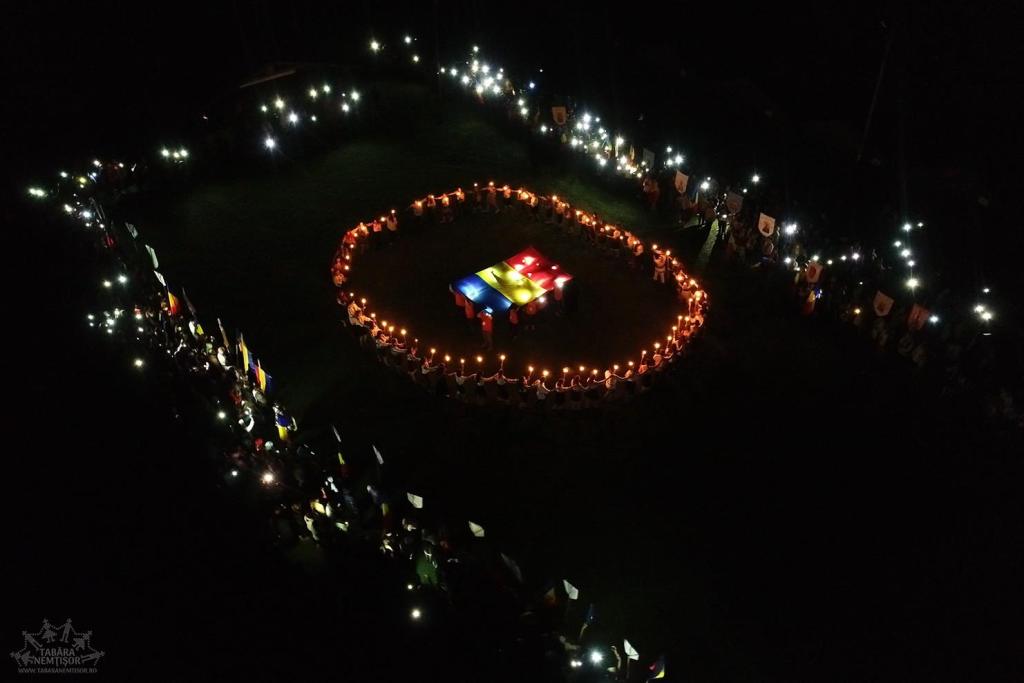
„For today’s young people, the life of Saint Paraskeva is an invitation to use their freedom not for squandering, but for spiritual growth „
Archim. Nicodim Petre

Saint Paraskeva certainly had her own questions and struggles, much like us, yet she possessed the courage to say “yes” to God’s will. It is precisely this choice that makes her a contemporary figure for every generation. For the young people of today, her life serves as an invitation to use their freedom not for waste, but for spiritual growth, for drawing closer to the true and eternal Life. We are invited to say “no” to an empty present and to choose a life fulfilled with grace and meaning.
I was a student, and together with a few classmates I have decided to travel several weeks around Europe. We made a plan and then set off by car. Hungary, Austria, France, Spain, Italy… Romanian Orthodox parishes, museums and imposing cathedrals in Europe’s major cities. When we arrived in Lyon, we decided to visit the Basilica of Notre-Dame de Fourvière, which offered a view of the entire city. We arrived at an inconvenient time and found it closed. We walked around it, admired Lyon and then stopped to look at some stained-glass windows which we wanted to unravel by looking at them from the outside.
Meanwhile, the cathedral opened and a gentleman came over and invited us inside.
“What are you doing? Are you trying to understand the stained-glass windows by looking at it from outside the church?”
“Yes, we were trying to identify the icons in the windows and recognize the scenes depicted.”
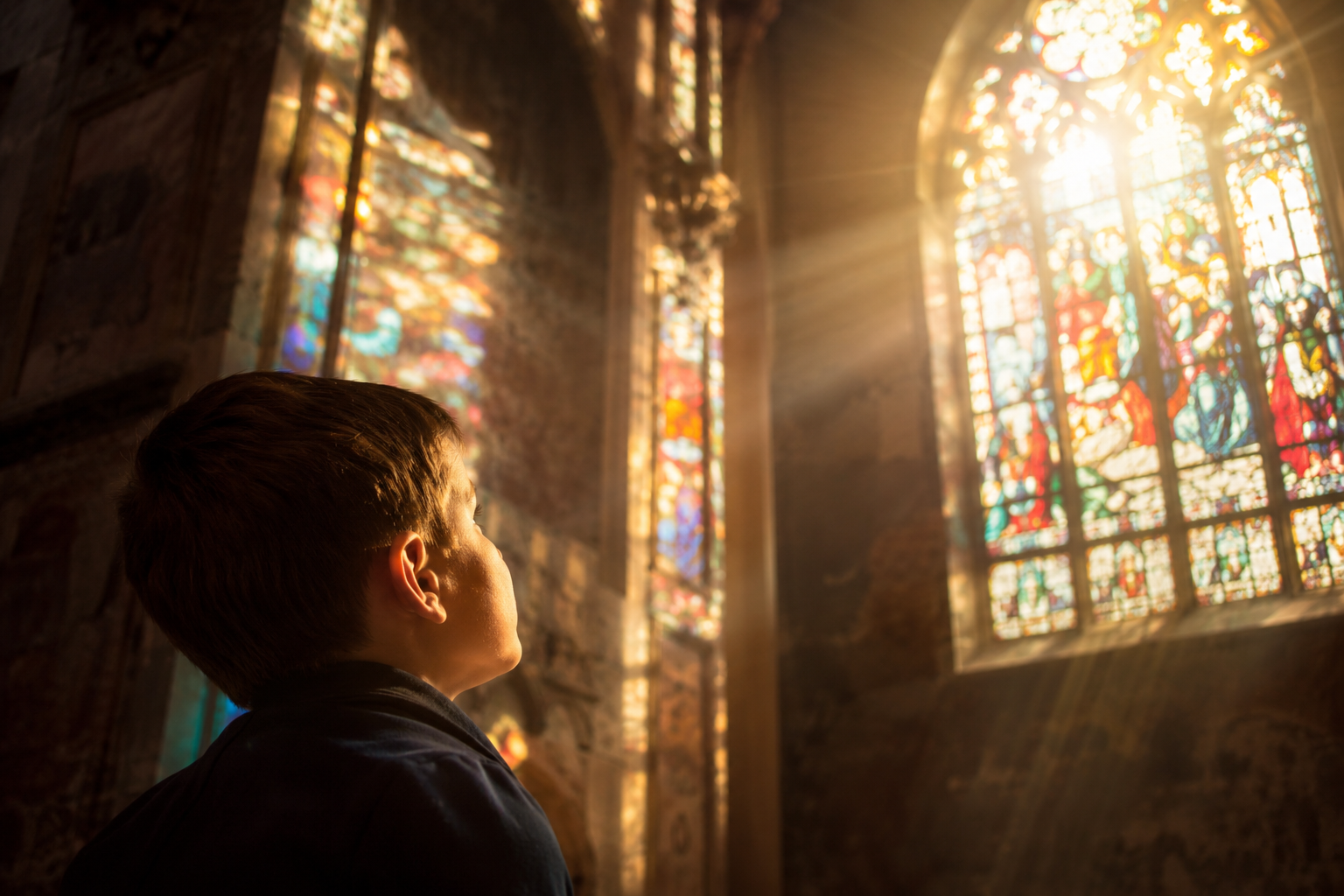
“You will never be able to understand either the stained-glass windows nor the meaning of Christian culture from outside the Church. Only from inside, bathed in the sunlight, will you be able to grasp the mystery of the stained-glass windows and the mystery of the spiritual life. From outside, you can see almost nothing.”
We entered the cathedral, and indeed, everything was revealed to us in the sunlight, which brought clarity to our vision and understanding. It is very difficult for someone who has not entered into the spirit of our faith to accept that a young person might renounce a worldly life to choose God, even go so far as to enter a monastery.
Saint Paraskeva was among those who chose a different path. She went—as we might say today—against the current; she did not follow the trend, but rather the truth. She chose Heaven over earth. Yet, renouncing worldly life did not mean a loss, but gaining something far greater. Her example shows that youth is the most fitting time to choose God. Youth is not a neutral, “trial” period, but a decisive time. The good choices made now, build a beautiful life.
The meaning of life is oriented toward “the life of the age to come”
Parents whose children embrace monastic life often perceive the monastery as a loss, a form of isolation, or an escape from the responsibilities of an ordinary life: “He had his whole life ahead, a career, a family, joys… and he is giving it all up for nothing.” Sometimes, parents blame their children’s friends, spiritual fathers, or religious books for turning their children’s minds. In other instances, parents blame themselves: “We failed to provide what was needed, which is why he fled to monastery” For most people, the meaning of life is found here, in the world. For a young person touched, like Saint Paraskeva, by the wing of the Holy Spirit, the meaning of life is oriented toward “the life of the age to come”, as we confess in the Creed: I look for the resurrection of the dead and the life of the age to come.
That is why parents, especially those who have never had the opportunity to “look at the stained-glass windows from inside the Church”, cannot fathom why anyone would turn their back on what the world has to offer – on “what is real” – in favor of “something unseen and intangible”. “You’ve cast aside all our hard work. You’ve ruined our plans; you’re bringing us shame. First, go build a life for yourself, see the world, and then – if you still want to – go to a monastery.”
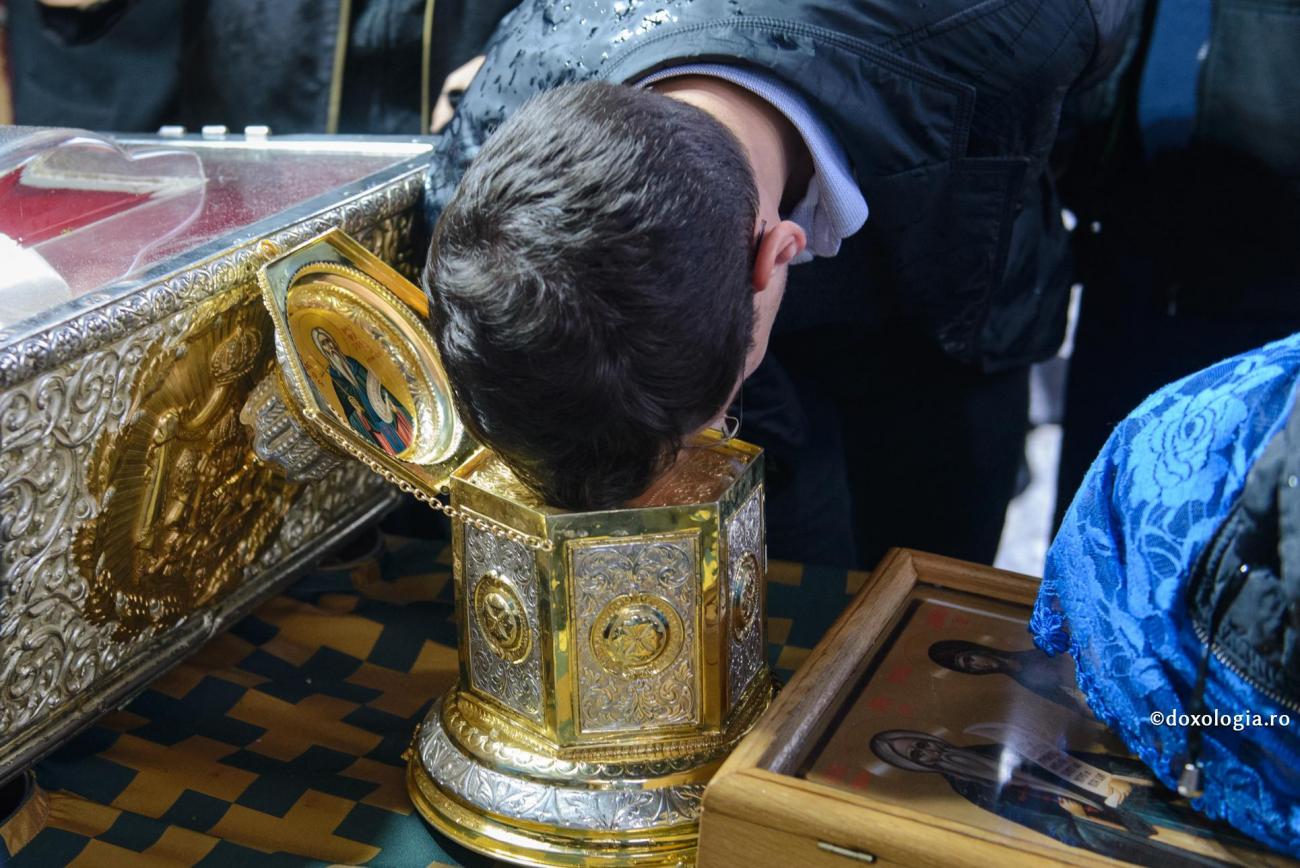
Every autumn, Iași becomes the spiritual center of Romania. Tens of thousands of people arrive to pay their respect at the reliquary containing the holy relics of a young woman. Among the pilgrims are many university students and schoolchildren. Some are driven by curiosity, others are brought along by friends or family, yet many come because they sense that this young woman, known as the “Protectress of Moldavia”, has something to say to their lives.
A simple girl who had the courage to choose God
Born into a devout family, Saint Paraskeva had an ordinary childhood. She was a young woman much like any girl today. She was not a mythical heroine. Nor was she an elderly woman, seasoned by life’s experiences and the disappointments gathered over the years, who decided to renounce everything at the end of her life. No. She was a simple girl who, nonetheless, had the courage to choose God rather than what the world offered, with all its fleeting, transient things.
Saint Paraskeva certainly had her own questions and struggles, much like us, yet she possessed the courage to say “yes” to God’s will. It is precisely this choice that makes her a contemporary figure for every generation. For the young people of today, her life serves as an invitation to use their freedom not for waste, but for spiritual growth, for drawing closer to the true and eternal Life. We are invited to say “no” to an empty present and to choose a life fulfilled with grace and meaning.
The life of Saint Paraskeva reached its fulfillment not through the number of her years, but through holiness.
Every generation of young people, including the present one, grapples with the dilemma of meaning. What should I do with my youth? In what should I invest my years, energy, intelligence, and creativity ? Which path should I take? Saint Paraskeva passed from earthly life into the heavenly realm at the age of 27, an age at which many people are still uncertain about the purpose of life. Yet, the Venerable Saint’s life reached its fulfillment not through the number of her years, but through holiness. The holiness of Saint Paraskeva demonstrates that true maturity does not depend on the number of years we live, but on the wisdom of our choices. “It is not years that make us wise, but the decisions we make” (Saint John Chrysostom).
We sometimes encounter elderly people who have never understood the meaning of existence. We sift through the truths we have accumulated over the course of our lives, only to find that nothing remains in the sieve. Either because the mesh is too wide, or because our truths are too insignificant (Olivier Clément). We reach the end of our lives with an empty satchel. Often, on the street or in shops, we come across faces worn down by exhaustion and the absence of any sense of purpose.
Young people today live in a world of multiple options
Why does a young woman who lived a thousand years ago continue to inspire teenagers and young people even today?
It is clear that, for us living now, far more opportunities are available. Making a choice seems much more difficult. Today, young people live in a world of multiple options: career, social media, entertainment, money, travel. All promise instant happiness. But what happens when you have everything, yet your soul remains restless and empty? What happens when, after many experiences, you are left with only a void in your soul? Youth is not merely a time for consuming and exhausting oneself, but a time for building and giving.
True youth is not spent on outward pursuits; rather, it is cultivated from within. We are invited to encounter Christ in our hearts, for that is where true peace and joy reside. “For the Kingdom of God is not a matter of eating and drinking, but righteousness, peace and joy in the Holy Spirit” (Romans 14:17). From this inner communion springs the strength to offer love, peace, and joy to those around us.
A young person chooses the monastery not because the world is inherently evil, but because they wish to begin living now in the joy of the Kingdom of Heaven.
A monk does not withdraw from the world because he despises it. Nor does he choose the monastery as a refuge or an escape from life’s hardship. Rather, he chooses it to gain the time needed to know God more deeply and remain close to Him. Whitin the monastery, the soul is unburdened – freed from possessions, anxieties, and desires and finds stillness. It is only here that a person truly comes to know oneself.
Even while living in the world, we cannot make the best decisions until we come to know ourselves. When you do not know yourself, you cannot discern what your soul truly needs or what is truly right for you. Such self-knowledge does not come from looking at yourself in a mirror, but from looking into the depths of your own soul, and this can be achieved only through prayer.
We are all called to a holy life
Monastic life is truly heroic, yet this heroism does not spring from human strength; it comes from God’s calling, from the grace of the Holy Spirit, who transforms acts of renunciations into sources of joy. Not everyone is called to the monastic life, but we are all called to a holy life, to love of God and of our neighbor.
We have wonderful examples of young people who lived in the midst of a hostile world, yet remained steadfast through their choices, through prayer, courage, and faith: Saint Paraskeva the Venerable, Saint Demetrius the Martyr, Saint Barbara, the Three Holy Youths of Babylon, Saint Catherine, Saint John the Wallachian, and others.
Right choices are not merely the result of our own wisdom; rather, they are, above all, the fruit of the cooperation between human freedom and Divine grace. Finding a spiritual father, prayer, confession and Holy Communion enlighten us to choose what brings fulfilment to our souls.
Lasă un răspuns